

Co-presented with Tricycle: The Buddhist Review
Using Haiku to Unite with the Natural World
The haiku poet lives in a world where everything is alive. From birds and flowers to mountains and rivers, all things share an imperishable essence that infuses them with emotion and meaning. The poet’s task is to “greet” these beings on an equal footing, uniting with the “animate everything” that sustains all life on earth. The Path of Haiku preserves a lost way of radical belonging to this world.
This weekend, Tricycle haiku columnist Clark Strand will guide us in writing small poems with big messages. We’ll explore the origins of haiku in ancestral ways of knowing that erase the boundary between the human and natural worlds. We’ll experiment with techniques pioneered by masters like Bashō and Chiyo-ni, Shiki and Kyoshi—and learn from modern poets like Richard Wright and Tomas Tranströmer, Sonia Sanchez and Victoria Chang.
Most of all, we will spend lots of time writing and sharing haiku together, with an emphasis on gathering material for our poetry directly from life, exploring the beauty of the Hudson River bioregion, discovering its trees and flowers, animals and insects, while enjoying its beautiful summer weather.
TEACHER

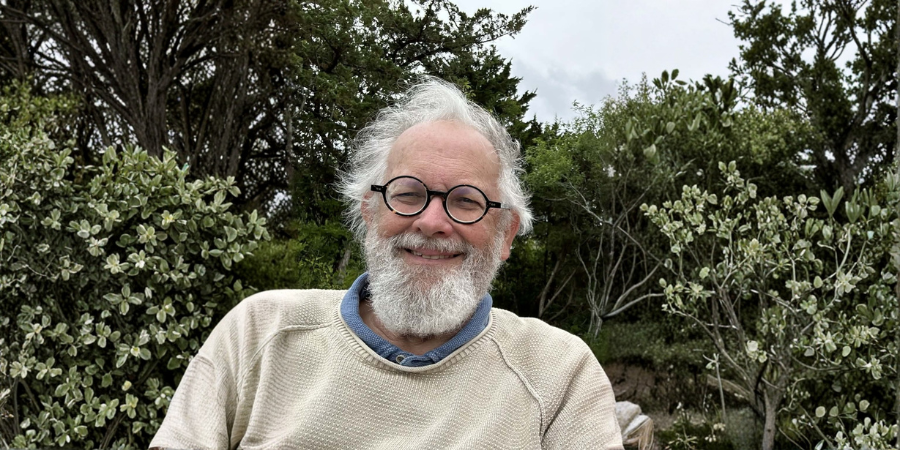
Clark Strand is a former senior editor of Tricycle: The Buddhist Review and the author of numerous works on poetry, spirituality, and ecology. His books include Seeds From a Birch Tree, Waking Up to the Dark, Waking the Buddha, and The Way of the Rose (co-authored with his wife and fellow writer Perdita Finn). His work has appeared in The Washington Post, The New York Times, and Wall Street Journal. Strand has been writing haiku for fifty years and has mentored some of the finest poets currently working in the form.
Tricycle is a non-profit Buddhist media organization dedicated to making Buddhist teachings and practices broadly available. Unaffiliated with any particular teacher, sect or lineage, Tricycle provides a unique and independent public forum for exploring Buddhism across traditions and within the broader culture.
ACCOMMODATIONS
There are Single, and Double rooms available. Please note, there is no available guest elevator and all rooms are accessible by stairs—except for those reserved for the mobility-impaired on the first floor. There are two communal bathrooms on each residential floor as well as a comfortable lounge with sofas and easy chairs, where tea and instant coffee are available. The lounges also are equipped with wireless, high-speed internet connection. There are several local hotels within driving distance from the Institute, for those who wish to stay off-site, as commuters. Onsite meals are included with commuter registrations.
COVID-19