By Laura Peña Zanatta
São Paulo, Brazil – January 2024
I was having lunch with my friend Daniel at a restaurant in a busy neighborhood. While we were talking excitedly, a homeless woman approached our table asking for food.
As we spoke with her, I could notice how her gaze and body were marked by what was likely a very difficult life. Unfortunately, where I live there are many people living on the streets. And still, the sadness I felt rose unexpectedly into tears.
Daniel, noticing my crying, listened patiently as I, a little embarrassed, shared my sadness and indignation. Without dismissing my feelings or the seriousness of what we had witnessed, he shared the Buddhist concept of dukkha – often translated as suffering, but also understood as something fundamentally out of joint, slightly misaligned, like a wheel that does not turn smoothly on its axle.
Life, in this sense, is not built for perfect alignment. Friction is not a mistake in the system; it is part of its structure.
Hearing this did not take away my sadness. But it helped me realize that I had been searching for a kind of comfort that was not possible – not only because it was rooted in an idea of perfection and completeness, but also because it unsettled my identity as someone who believes she must fix the world in order not to suffer.
Who do I become when the ground trembles?
“And now, what should we do?”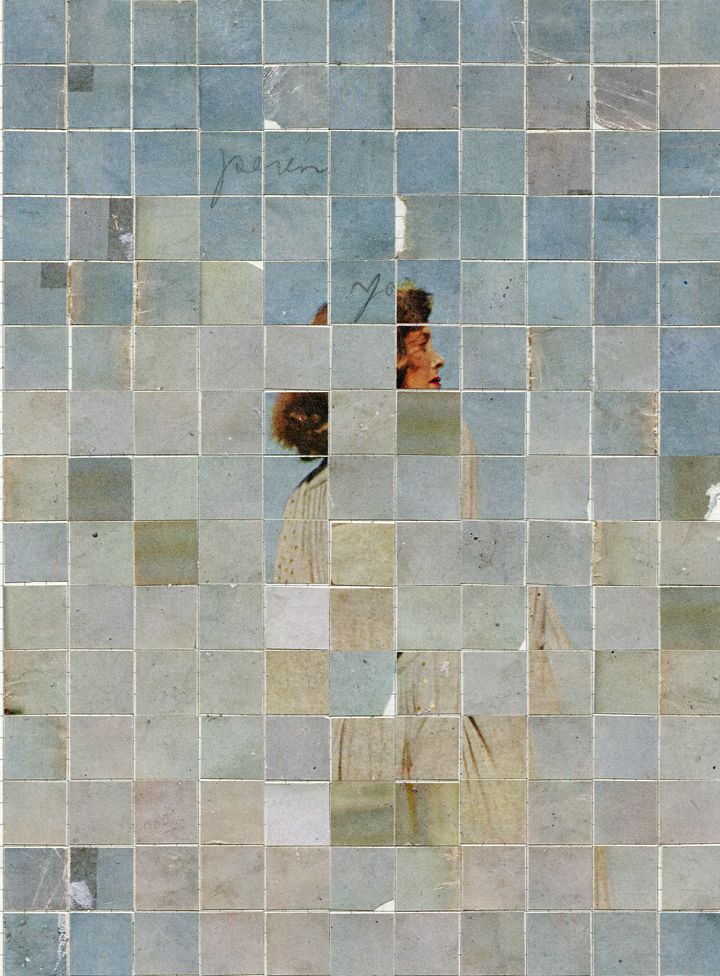
In my experience with facilitating groups, this is the question that inevitably arises when we are facing a matter that has no answer. And I suspect, it is not merely a question about action.
I believe that asking what to do is often an indirect way of asking: who am I now? Or even: who am I being called to give up being?
Not knowing is not simply a lack of strategy; it is an identity threat. It unsettles us because it puts at risk the image we had been holding of ourselves. That is why a quick answer about what to do – even if fragile or illusory – tends to bring relief. It restores contour to the self, preserves the narrative, and keeps the house standing – even if it is on fire.
But crises do not come to preserve houses.
Crises are the abyss between two known points, demanding a position from us while shaking decisions that once felt solid or even invisible.
Therefore, every crisis is a kind of initiation. It calls us to be what we have never been before. It calls us to become unfamiliar to ourselves. It calls us to transform.
We often forget that crises not only invite us to seek solutions but also to sustain the (dis)solution of what we think we know.
Inhabiting the Crack
One mark of our time is the emergence of crises that were once unnamed or invisible: crisis of meaning, loneliness, imagination, trust, care, and more.
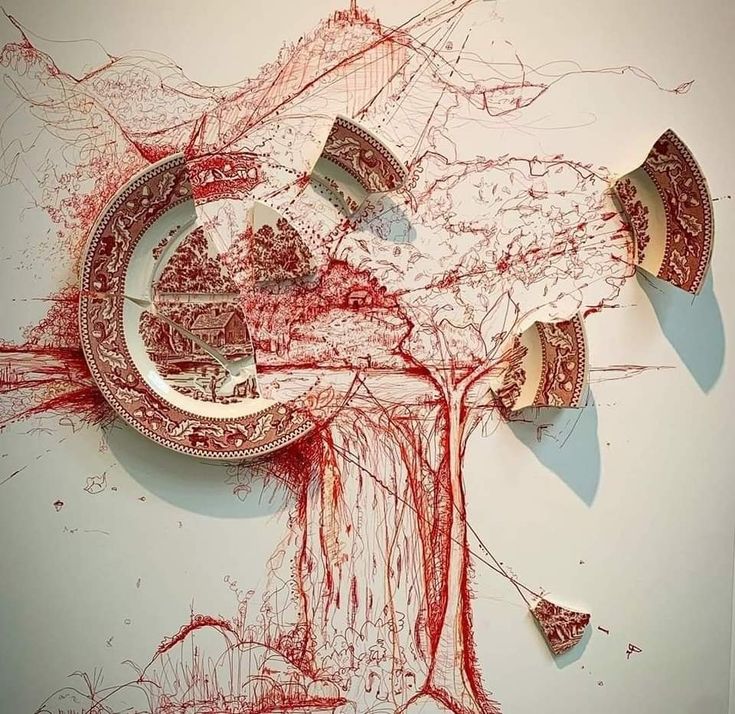
Given their complexity, they are not “solvable” through a master plan that leads to a final vision. Even if we did everything “right,” there would still be no guarantee of success.
For example, one may study ancient wisdom traditions, participate in transformative rituals, have strong guides and teachers and still not find meaning in life. The process is not a promise.
Likewise, it is possible to follow every protocol and still not feel mentally healthy; to practice relationship repair and still not gain trust; to be surrounded by people constantly and still feel lonely.
This confronts us with something difficult: in complex matters, our effort and agency do not guarantee transformation. It signals that, amid uncertainty, we are less “change protagonists” than we would like to admit.
Perhaps one of the greatest obstacles to surrendering to transformation is the belief that we already know how it should happen – and that we are the ones/heroes responsible for making it real.
Other Times in Times of Crisis
Notice how just like having a perfect plan and an inspiring vision of success, chronological time does very little for us in times of crisis.
How long does it take for a life to gain meaning?
How long until trust sprouts again?
How long until a body feels it belongs and it’s being cared for?
Even if we did everything we consider “correct,” we would still be unable to answer these questions. Because some dimensions of life do not respond to linear time. They operate in kairos – the time of life itself, a time that is mysterious by definition.
That is why transformation asks for a wild, disobedient, erratic, and unpredictable space-time.
Space-Time Distortion & the Illusion of Impact
This reminds me of when I was in Nigeria and asked a babalawo* how Yoruba culture understands time. After reflecting for a while, he said:
“Some people are surprised when they come seeking advice on financial problems and are told, for example, to take care of a plant.”
In Yoruba cosmology, space-time relationships are not established in linear, logical ways as in the Western worldview. Their wisdom brings us face-to-face with the mystery of life, challenging not only our notions of space and time but also words we deeply worship today: “impact,” ”scale” and ”value.”
It puts into question the belief that in order to have value we must do something grandiose, scalable, calculated, and unprecedented – and that our worth can (and will) be measured by how efficiently we perform toward a predefined destination.
Yet in crisis, some certainties tremble. And this is one of them.
What the babalawo teaches is that the way we look at the problem is always part of the problem. His proposed action does not aim to validate a pre-established cause-and-effect logic, but to transform the relationship itself. The action is not in the “act” itself — it is in the “in-between acts.”
Our gaze, conditioned as it is, gives the impression that no other ways of seeing life are possible. Yet the headlights guiding our vision are leading us to a dead-end road. And now, instead of turning back along the same road – since we already know where it leads – we must face the dark forest surrounding us.
Baba Yaga & Poetic Mathematics
So the question remains: What should we do?
My hypothesis is that crises signal an encounter with Baba Yaga** – the intimidating witch known for setting difficult trials for those lost in the forest. She calls us to fulfill tasks that are not about the pragmatism of knowing, but about the pragmatism of unknowing.
For Baba Yaga:
- The path does not exist in spite of being lost; it reveals itself precisely because one admits being lost.
- Effort is not brute force; it is the effort of listening – the kind that asks us to close our eyes to sharpen our sensitivity. To listen not because it is useful, but because it is alive.
- Time, like the path, has no beginning, middle, or end. It is the time of presence – leading not to a linear destination, but to a practice of depth.
If you have gone through a transformation that you could not have anticipated nor planned, but that shaped you forever, then you have already met Baba Yaga:
Maybe one of your greatest fears came true. Or perhaps it was only a soft voice asking: “What if?” Or you found yourself giving birth to answers that did not feel authored by you – and a part of you whispered, “I no longer recognize who I am.”
Looking back, you realize it did not feel like a revelation, but like a remembering. You re-membered a part of yourself by meeting something stranger.
It is no coincidence that Baba Yaga appears monstrous – encountering her is not an ordinary act; it is a ritual. A ritual that will always be strange to the eyes of what is familiar and known.
Like being in touch with an unknown forest, life reveals that it is not exactly what you imagined. You are not exactly who you imagined yourself to be.
Perhaps the solution to a mathematical problem may be hidden in a poem.
And straight plans already drawn may be full of movement, but poor in transformation – because there are too many nuances in life to fit into straight lines.
Join Laura with Dr. Bayo Akomolafe as they co-facilitate The School of Cracks from March 4-31, an online course culminating in an in-person retreat. They will be exploring the idea that societal systems and certainties have inherent fissures (cracks) that serve as potent sites for unexpected transformation and new ways of being. Learn More and Register
Laura Peña Zanatta is an organizational consultant, facilitator, experience designer, artist, and theorist-enthusiast exploring the conceptualization of rituals and their significance in contemporary times. Laura has worked extensively as a consultant, helping companies including Google, Nubank, KPMG, and Embraer, to gain awareness of their organizational culture, uncover underlying structures, and foster transformation from within. Currently, she is also serving as an innovation professor at Fundação Dom Cabral. For more about Laura’s work, please visit metamorf.me