A Methodology for Art and Awakening
For pioneering composer, singer, and interdisciplinary artist Meredith Monk, the boundary between her artistic practice and her dharma practice has increasingly dissolved.


Category
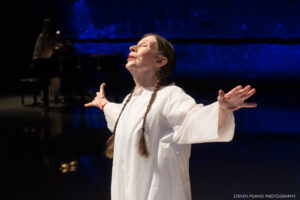
For pioneering composer, singer, and interdisciplinary artist Meredith Monk, the boundary between her artistic practice and her dharma practice has increasingly dissolved.

In a recent Substack article, Jonathan F.P....

Marisela Gomez, Kaira Jewel Lingo, and Valerie Brown reflect on bringing Buddhist teachings to people at the margins of society and the contemplations behind their books.

By Fru Molnar The Garrison Institute faces a...

By Lily Rockefeller Recently, Garrison Institute...

Here in America, we are born with unwell trees in our yards. Despite our potential, we face these living structures infected by ‘isms’ and phobias—racism, sexism, homophobia, xenophobia, and so forth.

We continue our two-part series on the Artificial Intelligence and Our Spiritual Imagination conference, held online October 17-18. We invited our speakers to sit with the same two questions to showcase the variety of perspectives, inquiries, and ways of knowing that will shape our conversations at the conference this fall.

As we prepare for the upcoming Artificial Intelligence and Our Spiritual Imagination
conference, held virtually October 17-18, we invited our speakers to sit with the same
two questions to showcase the variety of perspectives, inquiries, and ways of knowing
that will shape our conversations at the conference this fall.

Emptiness, a fundamental teaching in Mahayana Buddhism, might feel like a tough idea to chew on. It’s an insight that can feel more sobering than soothing at times, and it’s no stranger to misinterpretation.

The Garrison Institute and the Yale Forum on...

What if the darkest corners of ourselves, the places we most want to avoid, are actually lighting a path to greater freedom?
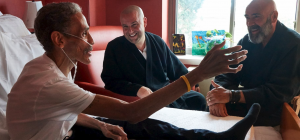
Not every challenge in medicine has a clinical solution. Illness, grief, uncertainty, and loss all ask something of clinicians that extends beyond their ability to diagnose and treat: the capacity to be present in the face of suffering.