Beyond the Ballot: The Inner Work of the Common Good
Lily Rockefeller reflects on contemplative practice, interdependence, and the inner work of building the common good beyond election results.


Category

Lily Rockefeller reflects on contemplative practice, interdependence, and the inner work of building the common good beyond election results.

What would we do differently if we remembered that our time was limited? Which grievances would we let go, which relationships would we tend, and which things we have been postponing would suddenly become urgent?
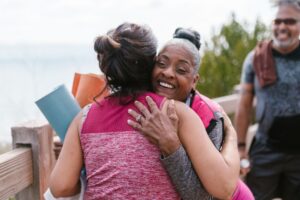
We spend much of our lives trying to become happy: pursuing achievement, security, recognition, and pleasurable experiences, while hoping to avoid pain, uncertainty, and loss. Yet even when circumstances go our way, sustained contentment can prove surprisingly elusive. Why? And is there a deeper form of well-being that does not depend so heavily on the external events that happen to us?
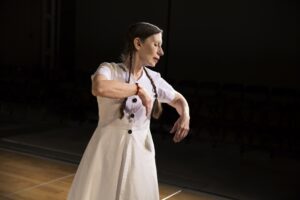
For pioneering composer, singer, and interdisciplinary artist Meredith Monk, the boundary between her artistic practice and her dharma practice has increasingly dissolved.

Marisela Gomez, Kaira Jewel Lingo, and Valerie Brown reflect on bringing Buddhist teachings to people at the margins of society and the contemplations behind their books.

If there were a way for me to designate the spruce at Garrison as a sacred tree, in order to invite other humans to take more time, care, and attention when sharing in its presence, it might look something like the tradition of adorning sacred rocks and trees in shimenawa.

Recently, Garrison Institute co-founder and urban planner Jonathan F.P. Rose was invited to “Life As It Is,” the podcast of Tricycle: The Buddhist Review. Co-hosted by Tricycle’s Editor-in-Chief James Shaheen and renowned mindfulness teacher Sharon Salzberg, the conversation explores Jonathan’s path to Buddhism, the founding and evolution of the Garrison Institute, and the ways contemplative practice can shape how we respond to social and environmental challenges.

Emptiness, a fundamental teaching in Mahayana Buddhism, might feel like a tough idea to chew on. It’s an insight that can feel more sobering than soothing at times, and it’s no stranger to misinterpretation.

What if the darkest corners of ourselves, the places we most want to avoid, are actually lighting a path to greater freedom?
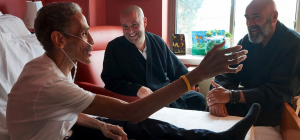
Not every challenge in medicine has a clinical solution. Illness, grief, uncertainty, and loss all ask something of clinicians that extends beyond their ability to diagnose and treat: the capacity to be present in the face of suffering.
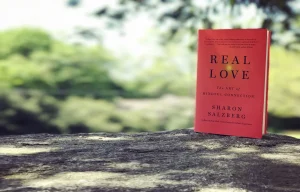
Lovingkindness practice asks us to embrace our shared humanity with all people, but it does not require us to agree with all of their actions.
Heartbreak finds us all, there is no escaping it. No matter how righteously we try to live, wounding can show up in forms we recognize and forms we don’t. We inherit the pain of human relationships and other unintegrated trauma channeled through the violence of world systems, generational trauma, family breakups, fractured friendships, and the tender emotional imprints left in us from intimate partnerships.