Bringing the Dharma to the Margins of Society
Marisela Gomez, Kaira Jewel Lingo, and Valerie Brown reflect on bringing Buddhist teachings to people at the margins of society and the contemplations behind their books.


Category

Marisela Gomez, Kaira Jewel Lingo, and Valerie Brown reflect on bringing Buddhist teachings to people at the margins of society and the contemplations behind their books.

Emptiness, a fundamental teaching in Mahayana Buddhism, might feel like a tough idea to chew on. It’s an insight that can feel more sobering than soothing at times, and it’s no stranger to misinterpretation.
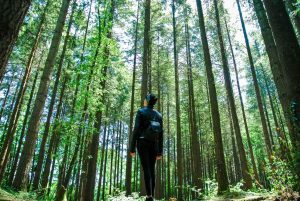
The environmental crisis is often described in the language of science, economics, or public policy. Less frequently do we ask what kind of mind produces a civilization capable of destabilizing the ecological systems upon which it depends.

The inaugural Conscious Change Forum hosted by Garrison Institute’s Spirituality & Social Change initiative and the Conscious Change Collective brought together more than 100 people from at least 10 countries, including change leaders, funders, spiritual activists, and leading practitioners working at the intersection of inner work, spirituality, and social change. We build upon a long history of nonviolent and spiritually based movements for justice, faith lineages that have invested deeply in societal wellbeing, and Indigenous traditions where the spiritual and communal are inseparable.

By John Kania, Radha Ruparell, Peter Senge, and...

Heartbreak finds us all, there is no escaping it. No matter how righteously we try to live, wounding can show up in forms we recognize and forms we don’t. We inherit the pain of human relationships and other unintegrated trauma channeled through the violence of world systems, generational trauma, family breakups, fractured friendships, and the tender emotional imprints left in us from intimate partnerships.
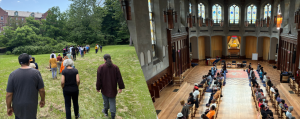
I sat in the meditation hall, bringing awareness to my in and out breath as the sunlight streamed in from the stained glass windows.
As the bell sounded and we began to walk around the meditation hall together in silence, I looked at the beautiful sangha that surrounded me and was overwhelmed by the amount of warmth, support — and most importantly, safety.
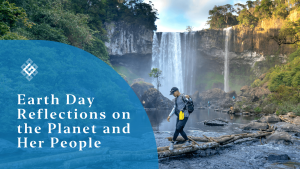
As we honor this year’s Earth Day celebration, we find ourselves reflecting on human relationships with nature and the complex ecologies that have supported life on Earth for millions of years. As a species, it’s clear we face a quandary rooted in mindsets that separate people and nature. However, cultivating gratitude, community resilience, and deep relationship with the land offers a hopeful path for a more harmonious future.

On May 30th, the Garrison Institute hosted an...
This month, we are planting seeds for an...
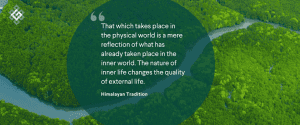
This Earth Day, we’re reflecting on words shared...

Sometimes we are supposed to be falling rather than standing upright. I am thinking of the life cycle of a leaf. A portion of a leaf’s life span consists of being firmly rooted on the branch of a tree, while at some point in time, the season comes where the leaf falls from the tree to the earth. If I could put myself in the experience of the leaf for a moment, I imagine the liminal moment between the leaf being firmly attached to the branch and the leaf finding itself unfastened by this uncontrollable gravitational pull to the earth, a moment of grief and fear. I understand our human lives to be similar to that of a leaf.