Love Everybody
Lovingkindness practice asks us to embrace our shared humanity with all people, but it does not require us to agree with all of their actions.

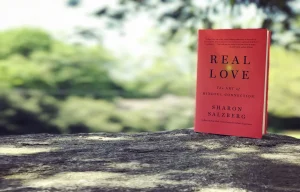
Lovingkindness practice asks us to embrace our shared humanity with all people, but it does not require us to agree with all of their actions.

This particular time of year feels like nothing so much as that brief moment of stillness between inhalation and exhalation, the equilibrium point between expansion and contraction, that brief instant of stasis and silence that comes with every breath.
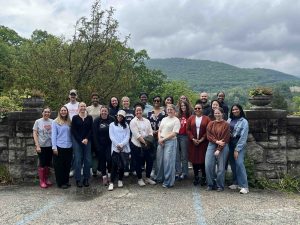
In May, I co-led a retreat that was part of a larger initiative through the Garrison Institute’s Contemplative-Based Resilience (CBR) program to support the staff of Restore NYC. This extraordinary organization stewards powerful, trauma-informed work serving survivors of trafficking and exploitation. I am still deeply moved by my time with the Restore team – filled with lasting inspiration, profound gratitude for their vital work. . .
Insights like these don’t always come through experiences that are challenging, painful or even traumatic. Sometimes they do. Hardship is not a prerequisite for wisdom, however, it is at least part of the process – and a very potent part, at that. We all have hardship in our lives. How we respond to hardship is what reveals whether or not we have developed wise characteristics.
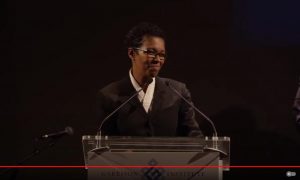
The Garrison Institute is delighted to present this recent Forum discussion between Fellowship Director Dr. Angel Acosta and the Reverend angel Kyodo williams, Sensei, in which they delved into the history of mindfulness in the West, contemplative entrepreneurship, and the liberative potential of meditation.

In this talk with Garrison Institute Fellowship Director Dr. Angel Acosta, "Contemplating Postactivism: Reframing Our Approach to Social Change," Bayo Akomolafe began by asking the provocative question: “What if the way we respond to the crisis is part of the crisis?” Dr. Akomolafe is a celebrated philosopher, writer, activist, professor, and international speaker. His work produced the concept of “postactivism,” which refuses the “us vs. them” thinking of traditional activism.
This narrative essay offers an exploration of the ways in which contemplative practice can be part of a strategy for nurturing health, well-being, meaning and joy in our everyday lives as Black contemplatives. Drawing on my experience as a Black queer scholar and college professor, attention is given to the notion of contemplative practice as a way of cultivating our internal emotional, intellectual and spiritual resources.
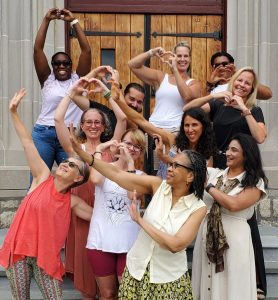
CARE is a unique evidence-based program designed to help educators (teachers and administrators) reduce stress and enliven their teaching and leadership by promoting awareness, presence, compassion, reflection, and inspiration – the inner resources they need to help themselves and their students flourish, socially, emotionally, and academically.
Teaching can be a very rewarding profession, but the stresses of the last two years have taken a great toll and we are now facing a teacher crisis of retirement and shortages that will affect and negatively impact education for a generation. A startling new Ed Week finding shows that the % of American teachers that are very satisfied with their jobs drop from 62% in 2010 to just 12% in April of 2022.
Because the body’s wisdom can only be felt in the present moment, movement practices are ideal tools for understanding the complex relationships between heart, mind, body, and the external world.
Garrison Institute Fellow and Pandemic of...
Wisdom is a product of contemplation, of time...