By Eric Gerard
Here in America, we are born with unwell trees in our yards. Despite our potential, we face these living structures infected by ‘isms’ and phobias—racism, sexism, homophobia, xenophobia, and so forth. Even if we didn’t choose these ill trees, they’re in our backyard. We can try to chop them down, ignore them, and let the conditions worsen, or we can do the fearless work of caring for them so they can nourish us in return.
Being racialized isn’t our fault, because we were born into a racist system, but undoing that work means caring for the elements we can control regardless of blame. As a young black man, I didn’t choose the patriarchy, but I can do the work to change the conditions, so the actions or fruit I have to offer the world are not from an undernourished, unexamined tree.
“That is why in Emptiness,
Body, Feelings, Perceptions,
Mental Formations, and Consciousness
are not separate self-entities.”
This is an excerpt from Thich Nhat Hanh’s (Thay’s) revision of the Heart Sutra. For those unfamiliar, this stanza captures the essence of the sutra; especially if we note that “emptiness” here can be defined as interdependence or inter-being, as Thay refers to it in his book, The Other Shore.
Let’s take some liberties with the stanza:
That is why, in interdependence,
roots, leaves, fruit,
soil, sky, sun, water
are not separate self-entities.
The tree elements of bark, leaves, roots, and non-tree elements of soil, sun, water are all parts of a tree. The tree and its elements are made of non-tree elements. On the relative level, yes, they’re separate and need to be cared for, but ultimately, they’re interconnected. All elements are directly dependent on the existence of the other. Separating and naming them is a cognitive shortcut, but at the end of the day, no soil, no fruit.
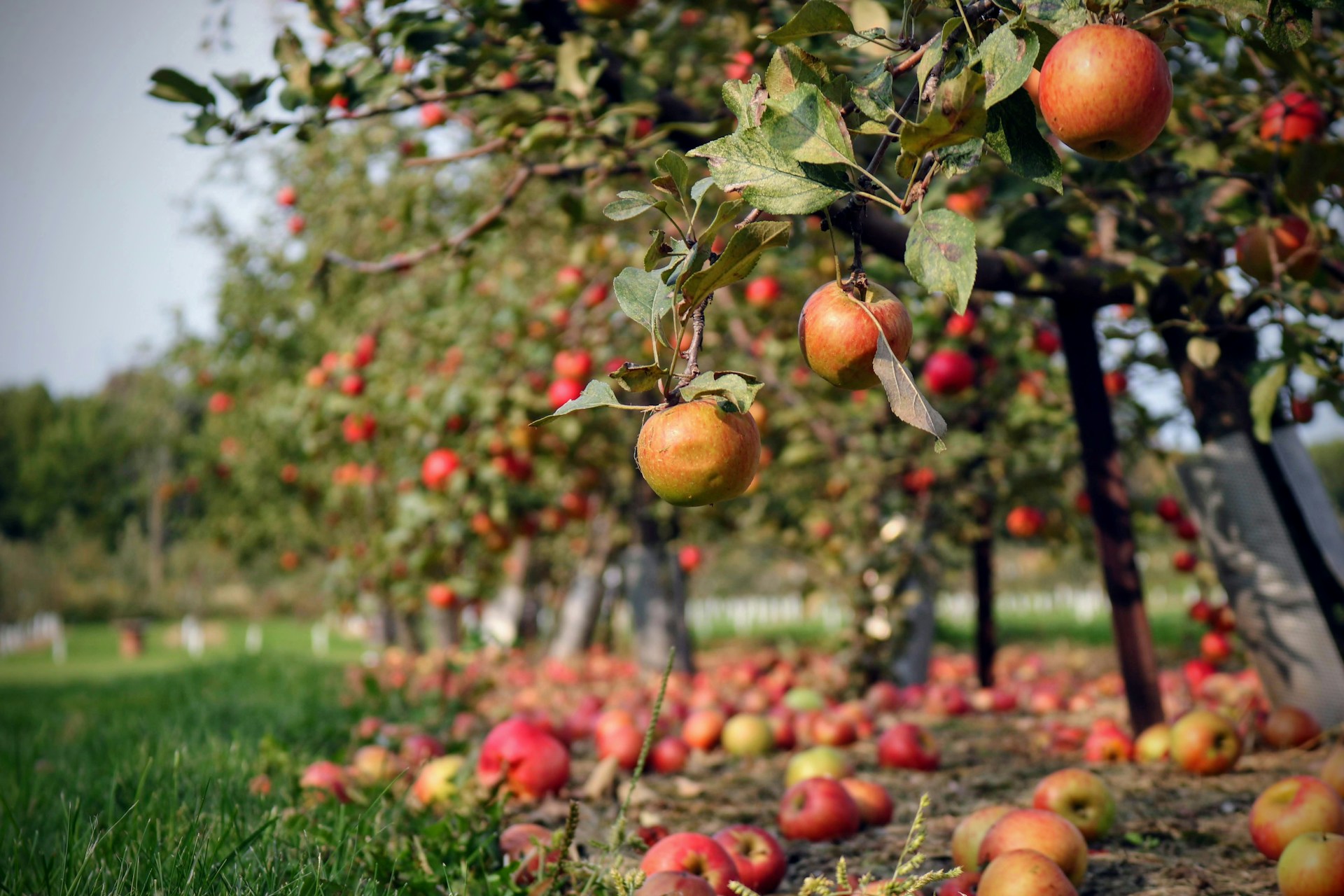
Imagine there’s a young tree in the backyard of your new house. You didn’t plant it, but now you’re responsible for it. You investigate the tree to decide whether to chop it down, leave it be, or work to keep it alive. You notice it has apples, but upon further inspection, there are pests, rotting fruit, decaying leaves, and the bark is peeling. You check the soil – also dry and generally unhealthy.
If an apple fell from this tree, then its seeds will inherit these conditions. The seeds will be introduced to poor soil, pests, and inadequate water, which will be the environment this sapling is “born into.” You decide having the tree is beneficial, so you want to care for it. To revitalize the tree, you have to tend to the elements you can control.
You can’t control the sun, but you can change the soil, prune dying leaves or branches, till the soil, and fertilize. To maintain the tree’s optimal health, you need to continue to monitor the environment. Lack of fertilizer brings stagnant growth; black spots on leaves point to pests or nutrient deficiencies in the soil; dry soil means a thirsty tree. They’re interdependent.
Bringing this depth of interbeing and interdependence pointed out by the Heart Sutra into our everyday lives, we can take the pressure and blame off ourselves. This way, we aren’t too mired in racialized wounds, shame, or guilt to do the work of collective freedom from oppressive systems. Collective and individual freedom are as interdependent as the soil is to the fruit.
“If we can truly understand the insight that brings us to the other shore, we will be able to help bring about a collective awakening. If collectively we are liberated from our fear, we will know exactly how to live for us, for our children, and for our civilization to have a future.”
– Thay, The Other Shore
Eric Gerard will serve as an assistant teacher at the Becoming Bodhisattvas: Learning to Let Go with The Heart Sutra retreat from Sept. 30 to Oct. 5 at Garrison Institute. He has been practicing mindfulness for about nine years and recently graduated from the Spring 2024 Dharma Moon Mindfulness Meditation Teacher Training cohort after three years of private study with Ethan Nichtern. Eric also completed the two-year Year Long Buddhist Studies course with A Mindful World, which has shaped his life and practice in meaningful ways. Originally from Chicago, Eric is an actor and also serves as the Co-Owner and Artistic Director at Blackbox Acting, a school that aims to prepare artists for their careers through a holistic approach.