

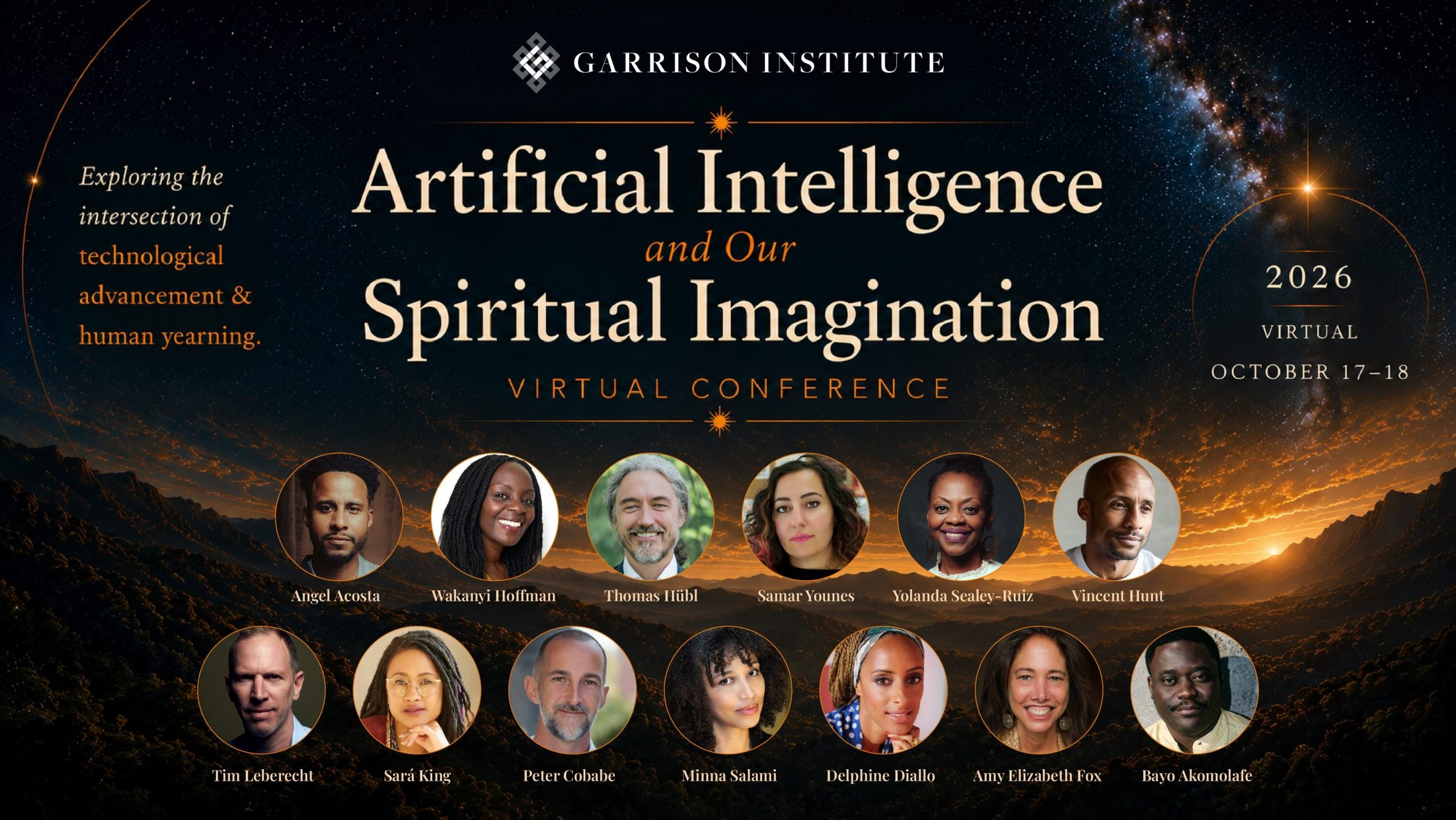
Virtual Conference
Hosted by the Garrison Institute
October 17–18, 2026
For the first time in human history, we are living alongside technologies that can generate language, images, music, code, and ideas with startling speed and sophistication. Artificial intelligence is rapidly reshaping education, business, healthcare, governance, creativity, and nearly every domain of human life.
Much of the public conversation has focused on questions of productivity, economic disruption, existential risk, environmental impact, commercial competition, and geopolitical power. These conversations are necessary, yet they are not sufficient.
Beneath the headlines, market valuations, policy debates, and technological breakthroughs lies a deeper set of questions:
- What is this moment asking of us as human beings?
- How is artificial intelligence changing the way we think, create, learn, relate, and imagine?
- What happens to our sense of meaning, purpose, identity, and spirituality when intelligence is no longer understood as uniquely human?
- How do we preserve our humanity while remaining open to transformation?
- What new forms of wisdom are needed in an age of artificial intelligence?
The Garrison Institute invites scholars, technologists, contemplatives, artists, educators, spiritual leaders, researchers, activists, and curious citizens to gather for a two-day exploration of one of the defining questions of our time: the relationship between artificial intelligence and our spiritual imagination.
This conference emerged from an ongoing dialogue between Dr. Angel Acosta and philosopher Dr. Bayo Akomolafe. Their conversation invited participants to move beyond familiar debates about efficiency and control and toward deeper inquiry into consciousness, intelligence, mystery, relationality, and what it means to be alive during a period of profound technological transformation.
At a time when many institutions are racing to deploy AI as quickly as possible, this gathering creates space to slow down and make sense of all the rapid change in this field.
Together we will explore:
- Artificial intelligence and the future of human flourishing
- Spirituality, contemplation, and technological transformation
- Consciousness, intelligence, and the boundaries of the human
- Creativity, imagination, and meaning-making in the age of AI
- Ancient wisdom traditions and emerging technologies
- AI, loneliness, belonging, and human connection
- Ethics, responsibility, and the preservation of human dignity
- Indigenous, ecological, and relational perspectives on intelligence
- The future of education, leadership, and community in an AI-shaped world
- Practices for remaining grounded, compassionate, and fully alive amid rapid change
As artificial intelligence continues to evolve at an exponential rate, humanity faces the profound challenge of relating to intelligent systems, while also deepening our own capacity for discernment and compassion.
Join us for two days of dialogue, contemplation, inquiry, and collective imagination as we explore what it means to remain deeply human in an age of artificial intelligence.
DETAILS
Dates: October 17–18, 2026
Location: Zoom
Format: Keynotes, dialogues, contemplative practices, panels, workshops, and community conversations
Audience: Educators, technologists, researchers, spiritual leaders, artists, organizational leaders, students, and anyone seeking deeper reflection on the human implications of artificial intelligence.
AGENDA
| 10:00 AM - 11:30 AM ET | ||
| The Inner Life of the Future: Leadership, Consciousness, and Human Flourishing in the Age of AI | ||
| With: Dr. Angel Acosta, Tim Leberecht & Amy Elizabeth Fox | ||
| 11:30 AM - 12:00 PM ET | Break | |
| 12:00 PM - 1:30 PM ET | ||
| Sensuous Knowledge and the Future of Intelligence | ||
| With: Minna Salami, Wakanyl Hoffman & Yolanda Sealey-Ruiz | ||
| 2:15 PM – 3:45 PM ET | ||
| Technology in Service of Collective Healing and Liberation | ||
| With: Dr. Sará King & Samar Younes | ||
| 3:45 PM – 4:15 PM ET | ||
| The Age of Supraintelligence: An Interactive Journey Exploring Human Connection and Collective Wisdom | ||
| With: Vincent Hunt, Dr. Angel Acosta & Peter Cobabe | ||
| 10:00 AM - 11:30 AM ET | ||
| When Intelligence Cracks: Exploring the Edges of Technology, Consciousness, and Our Spiritual Imagination(s) | ||
| With: Dr. Bayo Akomolafe & Dr. Angel Acosta | ||
| 11:30 AM - 12:00 PM ET | Break | |
| 12:00 PM - 1:30 PM ET | ||
| The Oracle and the Machine: Ancestral Wisdom, Art, & Re-Imagining AI | ||
| With: Delphine Diallo & Dr. Yolanda Sealey-Ruiz | ||
| 1:30 PM - 2:30 PM ET | Break | |
| 2:30 PM – 4:00 PM ET | ||
| The Future We Choose: A Community Dialogue on Responsibility and Collective Action | ||
| With: Dr. Angel Acosta & Special Guests | ||
SPEAKERS
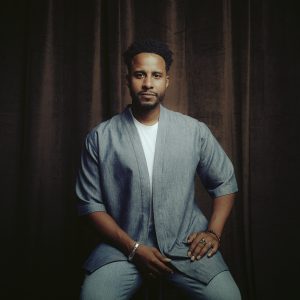
Image by Rog Walker, Paper Monday
For the last decade, Dr. Angel Acosta has worked to bridge the fields of leadership, social justice, and mindfulness. He holds a doctorate in Curriculum and Teaching from Teachers College, Columbia University, and develops learning experiences that weave leadership development with conversations about inequality and healing through contemplative and restorative practices. Lately, he has become curious about the ways technology can be used as a force for advancing racial equity and dismantling structural inequality.
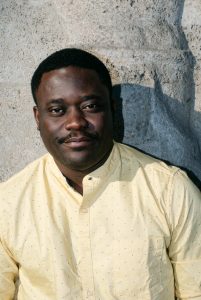
Bayo Akomolafe is a philosopher, writer, public intellectual, and internationally recognized speaker whose work explores complexity, posthumanism, decolonial thought, and new possibilities for social change. Founder of The Emergence Network, he challenges conventional ideas about progress and transformation, inviting individuals and institutions to cultivate deeper relationships with uncertainty, ecology, and one another.
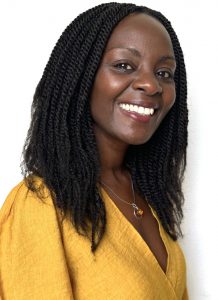
Wakanyi Hoffman is an Ubuntu philosopher, African Indigenous Knowledge scholar, author, and global speaker. Her work explores how Indigenous wisdom, storytelling, and Ubuntu ethics can shape education, human flourishing, and the future of artificial intelligence through more relational and sustainable approaches.
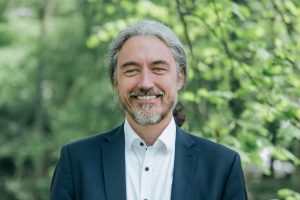
Thomas Hübl is a teacher, author, and facilitator internationally recognized for his work on collective trauma healing, systems transformation, and conscious leadership. Through his teachings and the Pocket Project, he integrates contemplative practice, neuroscience, and systems thinking to help individuals and communities heal historical and collective wounds.

Samar Younes is a Beirut-born, Brooklyn-based scenographer, artist-theorist, and ancestral futurist whose lifelong subject is environment: physical, spatial, cultural, ecological, institutional, and computational, and the forces environments exert on perception and becoming. Through her practice SAMARITUAL, she developed Quantum Craft™, a cognitive craft posture that treats all conditions as material, encountered through their behaviors, resistances, and provenance, then kneaded, accumulated, and recomposed through call-and-response rather than prescribed method. Her ongoing Future Ancestors are living artifacts carrying ancestral provenance through continual mutation across image, textile, sound, object, and spatial form; the series has entered the permanent collection of the Dubai Future Foundation. She has taught, lectured, and exhibited internationally.
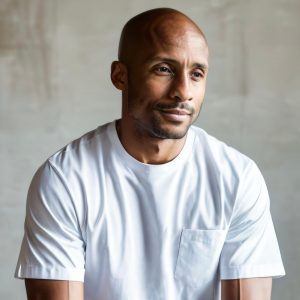
Vincent Hunt is an educator, facilitator, and leadership practitioner whose work centers healing, racial equity, and transformative learning. He helps organizations and communities develop leadership practices rooted in compassion, belonging, and human flourishing while navigating complexity and systemic change.
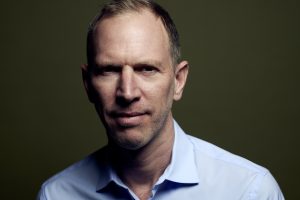
Tim Leberecht is a business strategist, author, and co-founder of the House of Beautiful Business. His work explores beauty, belonging, and human-centered leadership, challenging organizations to rethink success through purpose, imagination, and meaningful human connection.
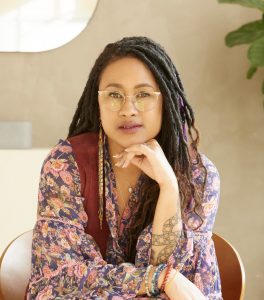
Dr. Sará King is a neuroscientist, educator, and contemplative practitioner whose work bridges neuroscience, meditation, social justice, and the healing arts. She explores how contemplative practices can transform individual well-being while supporting collective liberation and more compassionate futures.

Minna Salami is a Nigerian-Finnish and Swedish author, social critic, and former Senior Fellow and Programme Chair at THE NEW INSTITUTE. She is the author of Can Feminism Be African?: A Most Paradoxical Question (2025) and Sensuous Knowledge: A Black Feminist Approach for Everyone (2020), and is a leading voice in contemporary feminism who collaborates internationally as a writer, lecturer, advisor, and keynote speaker. She is also a Full Member of the Club of Rome and a BMW Foundation Responsible Leader.
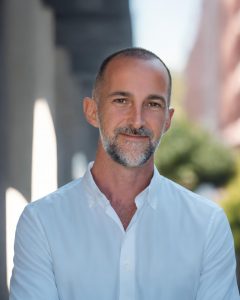
Peter Cobabe is on a mission to empower people and contribute to our collective evolution through technology. As the Cofounder of RLTM AI, he combines expertise in artificial intelligence, organization theory, cognitive psychology, and systems thinking to drive transformative growth and innovation while creating technology that shifts our mindset from “Time equals Money” to “Time equals Creativity & Art.”

Delphine Diaw Diallo is a French-Senegalese visual artist whose work explores the relationship between image, consciousness, and cultural narrative through photography, collage, moving image, and artificial intelligence. Her work has been exhibited internationally at institutions including the Louvre Abu Dhabi, the United Nations, and Somerset House, and she continues to explore regenerative visual languages through her ongoing artistic research project, The Oracle Codex.
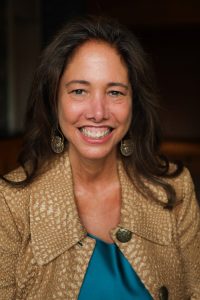
Since 2005, Amy Elizabeth Fox has served as one of the founders and Chief Executive Officer of Mobius Executive Leadership, a global transformational leadership firm. For the last twenty years she has served as a leadership and culture change advisor to eminent professional services firms and Fortune 500 companies and facilitated immersive executive development programs for senior leaders.
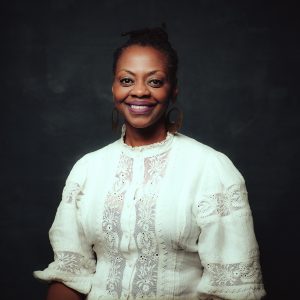
Image by Rog Walker, Paper Monday
Dr. Yolanda Sealey-Ruiz is an award-winning educator, poet, author, and nationally recognized scholar whose work explores the intersections of race, literacy, equity, and healing in education. A professor at Teachers College, Columbia University, she is the creator of the Archaeology of Self™ framework, which invites educators and leaders to examine their identities, beliefs, and experiences as a pathway to greater compassion, justice, and transformative leadership. Her work has inspired educators and organizations around the world to cultivate deeper self-awareness and more humanizing approaches to teaching, learning, and social change.
Please contact us for questions and inquiries at events@garrisoninstitute.org.